Skip to content
Axon Pulsar

Motors, finished by hand.

Fully CNC-machined from 6061-T6 — not cast like most of the category. Engineered as a system with the Axon Shock controller, so the power on the spec sheet is the power at the wheel.

Sur-Ron Ultra Bee
01 / 02
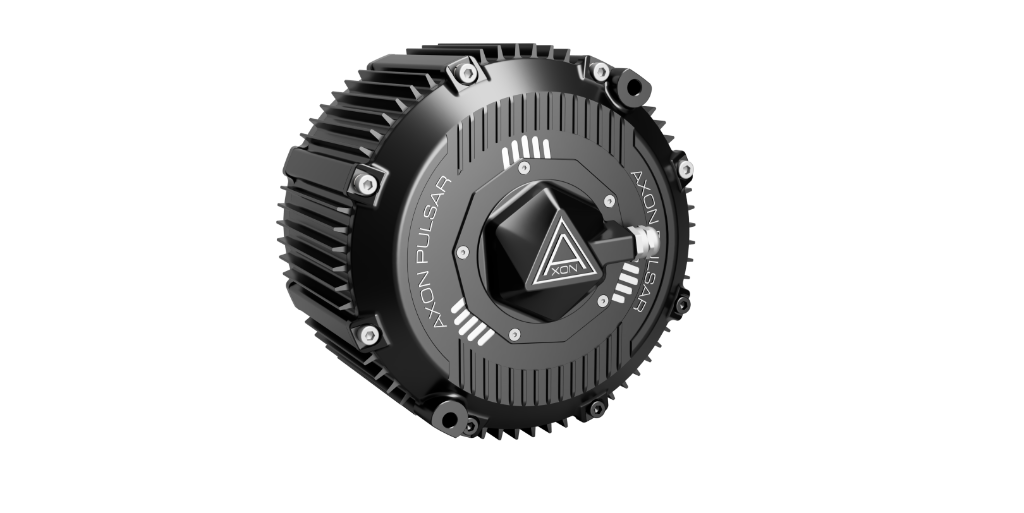
Axon Pulsar Ultra Bee — Standard
Axon Pulsar

Ultra Bee.

55kW
Peak power
Peak torque
100Nm
Stator diameter
82mm
Weight
13.7kg
Phase amps
1500A
Protection
IP67

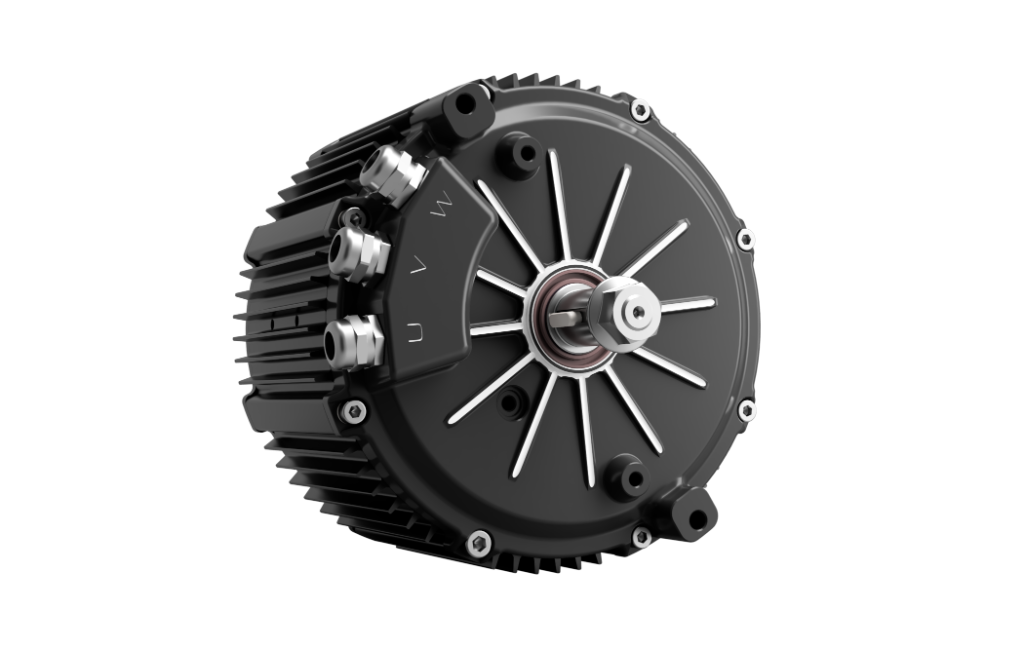
CNC-machined from a single billet of 6061-T6 — none of the void risk or porosity of a cast housing. Bolts straight to the Ultra Bee stock mounts, runs cooler under sustained load, and pairs natively with the Axon Shock controller.

  • 55 kW peak power output
  • 82mm stator — largest of any Ultra Bee motor
  • Full CNC construction, not cast
  • IP67 waterproofing
  • Direct bolt-on fit to Sur-Ron Ultra Bee
View Ultra Bee motor
Sur-Ron Light Bee
02 / 02
Axon Pulsar Light Bee — Standard
Axon Pulsar

Light Bee.

46kW
Peak power
Peak torque
90Nm
Stator diameter
60mm
Weight
11kg
Phase amps
1200A
Protection
IP67

A drop-in for the Light Bee that holds onto everything the platform is good at — light, balanced, efficient — while lifting the ceiling on what it can deliver. Same billet construction, same CNC cooling, no cast compromises.

  • 46 kW peak power output
  • 60mm custom Axon-designed stator
  • Full CNC construction, not cast
  • IP67 waterproofing
  • Direct bolt-on fit to Sur-Ron Light Bee
View Light Bee motor
Why CNC

Three decisions that show up every ride.

The category norm is cast housings, generic windings, and motors specified independently of the controller. None of those decisions hold up under sustained load. So we made the opposite ones.

Billet, not cast.

Fully CNC-machined from 6061-T6 — tighter tolerances, no porosity, and a heat path designed end-to-end. Most competitors die-cast to save tooling cost; we machine to hold spec.

Designed for the controller.

A motor is only as good as what is driving it. Pulsar is mapped against the Axon Shock power stage — phase angles, KV, and thermal curves matched as a system, not bolted together as parts.

High output, fair price.

Lower cost than the imported alternatives, no compromise on the housing, bearings, or stator winding. The point of building in-house is being able to control that trade-off.

Build the system

Motor and controller.
Engineered as one part.

A motor swap alone tops out at the controller's limits. Run them together and the system can finally deliver what the spec sheet says.